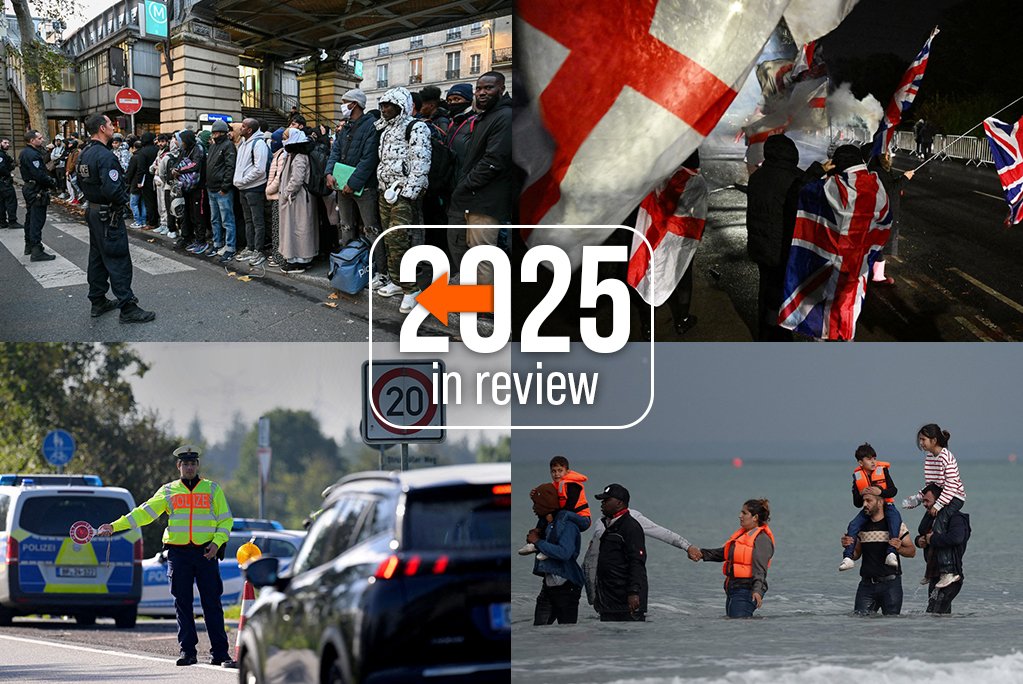
Throughout 2025, InfoMigrants followed the political developments across Europe as well as in transit countries for migrants. While European countries like Greece and the United Kingdom hardened their policies toward both regular and irregular immigrants, there were changes afoot on the African continent as well: Tunisia and Mauritania hardened their repressive practices toward undocumented migrants. InfoMigrants compiled an overview of the most important developments.
1. France: New guidelines restrict access to citizenship
France's Interior Minister Bruno Retailleau tightened the criteria to obtain French citizenship in exceptional circumstances (known as "AES" in France).
Under the new law, the required duration of French residence was raised to "at least seven years," compared to five or three years previously.
Similarly, the guidelines for the level of French language proficiency to obtain citizenship were also raised to a B2 spoken and written level, which corresponds to upper intermediate proficiency.
Several months later, the Ministry of the Interior issued updated guidelines to prefects across the country on how to implement the changes, providing guidelines on the new restrictions to access of French nationality to foreigners.
Read Also
French lawyer deplores new measures for undocumented immigrants
2. Mauritania: Reports of arbitrary detentions and expulsions
The Mauritanian government introduced a new repressive policy at the beginning of 2025, aimed at curbing the numbers of sub-Saharan migrants in the country who ultimately were seeking to reach Spain's Canary Islands via the perilous Atlantic route.
Mauritania had become the main departure point in West Africa in 2023 for migrants seeking to reach the Canaries, when the country entered talks with the European Union (EU) and later signed a partnership to stem this trend.
According to the deal, Nouakchott became responsible for stopping migrants from leaving for the Canary Island in exchange for funds from the EU. Officials intercepted over 30,000 migrants between January and April 2025 alone, according to government data published in May.
Numerous migrants have since spoken of arbitrary arrests taking place on the street or at their workplace in Mauritania - and not only at the known departure spots.
Many were later deported toward the country's borders and beyond, especially to the city of Rosso in Senegal.
Thousands of migrants found themselves in the border city in 2025, lost and discouraged after their forced expulsion from the Sahel nation.
Read Also
On the Senegal-Mauritania border, hundreds of migrants are 'in a desperate situation'
3. Greece: governments hardens immigration laws
As one of the countries at the forefront of migration into Europe, Greece was already known for having on of the most restrictive immigration policies across the continent. Its laws, however, became even harsher in 2025.
In September, the government introduced new legislation whereby people without authorization to live in Greece will face lengthy prison terms if they refuse to cooperate and leave.
Read Also
ECtHR finds Greece's border 'pushbacks' illegal in landmark ruling
Greece also eliminated a law that allowed irregular migrants to apply for residency after spending seven years in the country.
The Greek parliament also adopted another law in September designed to facilitate the forced return of failed asylum seekers to their country of origin or possibly to a "safe third country."
Read Also
Greece wants to work with Germany in building third-country migrant centers in Africa
Earlier in the year, Athens had announced a three-month moratorium on asylum applications being processed between July and October.
This measure was prompted by a dramatic increase in irregular arrivals on the southern island of Crete; a record-breaking 16,770 people seeking asylum in the EU arrived on the island in 2025 in total, according to the UN Refugee Agency.
4. Spain: Viral image leads to violence in Torre Pacheco
Anti-migrant clashes rocked the Spanish city of Torre Pacheco, near Murcia, in the beginning of July after a photo of a 68-year-old local man with a swollen face went viral overnight.
The victim claimed that he had been attacked in the middle of a street by three youths from northern Africa.
The far-right quickly used the event to blame Moroccan immigrants; in order to avoid further escalation, the Guardia Civil and local police had to deploy over 100 officials across the city.
The Torre Pacheco affair coincided with anti-migrant riots in Northern Ireland and xenophobic protests in the UK around the same time.
5. UK: biggest changes to immigration law in decades
Over 110,000 people took to the streets of central London on September 13, 2025 in protest to the continued arrivals of "small boats" in the English Channel and the overall number of immigrants in the country.
Prime Minister Keir Starmer responded to the rallies, saying that despite its immigration challenges, the UK's flag represented "our diverse country."
At the same time however, Starmer’s government, facing growing pressure from the far-right, announced drastic immigration reforms shortly thereafter.
Under the new system, anyone granted asylum in the UK will automatically only receive 30 months of protection instead of the five years that would be granted as a matter of course previously. Additional assessment will also be introduced to each renewal after 30-month periods, with the government resolute to send people back home if the situation in their country of origin has improved.
Even long-term recognized refugees will now have to wait 20 years -- rather than five years -- to request a permanent residence permit, known in the UK as "indefinite leave to remain."
British Home Secretary Shabana Mahmood announced that settlement in the UK will from no on have to be earned by "contributing to society," and not by "paying a people smugglers to cross the Channel."
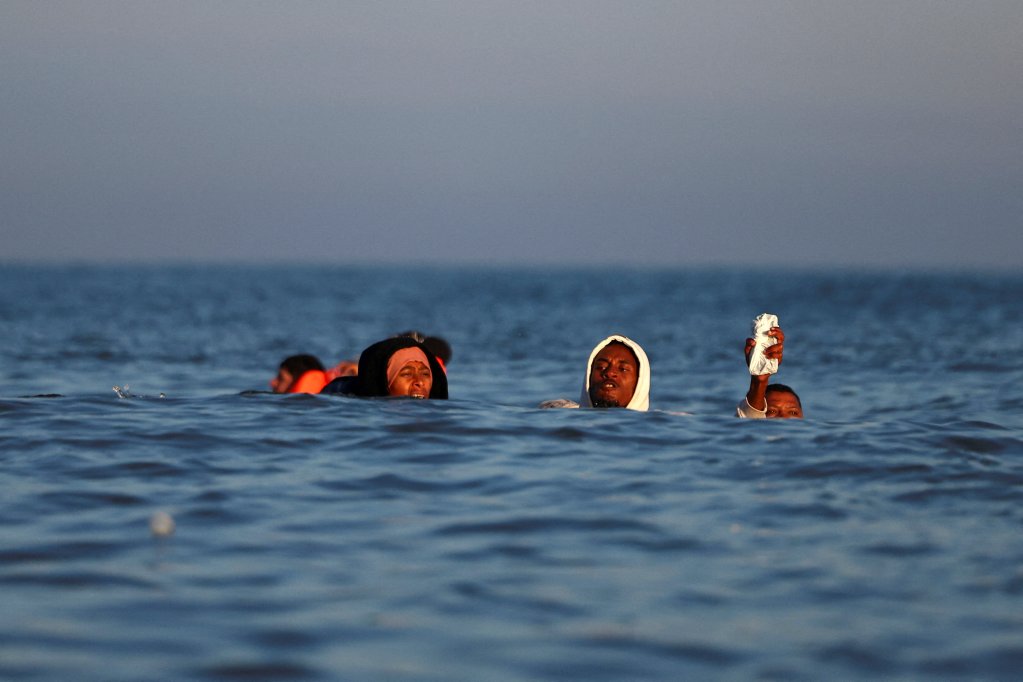 In many instances, migrants who wish to cross the English Channel irregularly now have to wade through the water or even swim short distances to be picked up by a small boat, as patrols against smugglers along the French coast have significantly increased in 2025 | Photo: Reuters
6. Tunisia: Deteriorating living conditions result in record voluntary returns
Thousands of undocumented migrants in Tunisia have decided to return to their country of origin amid deteriorating living conditions in the North African country.
Over 8,700 people benefited from various "voluntary return" programs to 26 different destinations, which are facilitated by the International Organization for Migration (IOM) in Tunisia.
This represents a threefold increase compared to the 2,250 voluntarily returns which took place in 2023.
With mounting return requests from migrants, IOM had to intensify these departures, while the Tunisian government also organized its own charter flights to repatriate migrants.
Comments (0)
Login Required
You must be logged in to post a comment.
Login RegisterNo comments yet. Be the first to comment!